Introduction
Corrosion is one of the most significant challenges facing the oil and gas industry. Every year, operators spend millions of dollars repairing or replacing pipelines, storage tanks, offshore platforms, and other steel infrastructure damaged by corrosion. Beyond the financial cost, corrosion can lead to environmental incidents, unplanned shutdowns, safety hazards, and reduced asset life.
Cathodic Protection (CP) is a proven corrosion control technique that protects metallic structures from corrosion, extending their service life and improving operational reliability. Combined with high-quality protective coatings, cathodic protection is widely recognized as one of the most effective methods for safeguarding critical infrastructure in the oil and gas sector.
This guide explains what cathodic protection is, how it works, the different types of systems available, and why it is essential for oil and gas facilities in Nigeria and around the world.
What is Cathodic Protection?
Cathodic Protection is an electrochemical corrosion control method that prevents metal structures from corroding by converting them into the cathode of an electrical circuit.
Corrosion occurs when steel naturally reacts with its environment—such as soil, seawater, or moisture—causing it to deteriorate over time. A cathodic protection system supplies electrical current or uses a more reactive metal to interrupt this corrosion process, significantly reducing or eliminating metal loss.
This technology is widely used to protect:
- Buried pipelines
- Above-ground and underground storage tanks
- Offshore platforms
- Marine structures
- Jetties and terminals
- Water treatment facilities
- Refineries
- Petrochemical plants
- Well casings
- Heat exchangers
Why is Corrosion a Major Concern?
Corrosion is often referred to as the “silent enemy” of industrial assets because it develops gradually and may go unnoticed until significant damage has occurred.
In oil and gas operations, corrosion can result in:
- Pipeline leaks
- Environmental pollution
- Product contamination
- Equipment failure
- Increased maintenance costs
- Reduced operational efficiency
- Regulatory non-compliance
- Safety risks to personnel
- Unplanned production shutdowns
Implementing an effective corrosion control strategy, including cathodic protection, helps operators avoid these costly consequences.
How Does Cathodic Protection Work?
Corrosion is an electrochemical process involving the movement of electrons between anodic and cathodic areas on a metal surface.
Cathodic protection works by ensuring the entire metal structure behaves as a cathode, preventing the oxidation reaction that causes corrosion.
This protection is achieved using one of two methods:
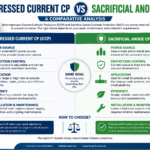
1. Sacrificial Anode Cathodic Protection (SACP)
This method uses metals that are more reactive than steel, such as:
- Magnesium
- Zinc
- Aluminum
These metals, known as sacrificial anodes, corrode in place of the protected structure.
Typical applications include:
- Small pipelines
- Water tanks
- Ship hulls
- Underground tanks
- Residential and municipal infrastructure
Advantages
- Simple installation
- No external power source required
- Low maintenance
- Reliable operation
2. Impressed Current Cathodic Protection (ICCP)
Impressed Current Cathodic Protection uses an external DC power source, typically a transformer rectifier, to deliver protective current to the structure through inert anodes.
ICCP systems are commonly used for larger facilities where higher levels of protection are required.
Typical applications include:
- Long-distance pipelines
- Tank farms
- Offshore platforms
- Marine terminals
- Refineries
- Petrochemical plants
- Power stations
Advantages
- Suitable for large structures
- Adjustable current output
- Longer anode life
- Remote monitoring capability
- Cost-effective over large installations
Components of a Cathodic Protection System
A complete cathodic protection system typically includes:
- Transformer Rectifier (for ICCP systems)
- Anodes
- Anode cables
- Junction boxes
- Test stations
- Reference electrodes
- Monitoring systems
- Remote monitoring units
- Cables and connectors
- Isolation joints
Each component plays a critical role in ensuring consistent and effective corrosion protection.
Industries That Use Cathodic Protection
Cathodic protection is used across numerous industries, including:
Oil & Gas
Protecting pipelines, flowlines, wellheads, tank farms, separators, and storage facilities.
Marine
Protecting ships, jetties, offshore platforms, dolphins, and subsea structures.
Water Utilities
Protecting potable water pipelines, reservoirs, and treatment plants.
Power Generation
Protecting buried steel structures, cooling water systems, and transmission facilities.
Petrochemical
Protecting processing equipment and storage infrastructure.
Benefits of Cathodic Protection
An effective cathodic protection system offers numerous benefits:
- Extends asset life
- Reduces maintenance costs
- Minimizes unplanned shutdowns
- Improves operational safety
- Protects the environment
- Enhances regulatory compliance
- Reduces lifecycle costs
- Improves asset reliability
- Supports business continuity
For many operators, cathodic protection is a long-term investment that delivers significant cost savings compared to repairing or replacing corroded infrastructure.
Why Cathodic Protection is Important in Nigeria
Nigeria’s oil and gas industry operates in environments that can accelerate corrosion, including coastal areas, swampy terrain, high humidity, saline soils, and offshore installations.
Without proper corrosion control, these conditions can shorten the lifespan of critical assets and increase operational risks.
A well-designed cathodic protection system helps operators maintain asset integrity, improve safety, and reduce maintenance costs while supporting reliable production.
Selecting the Right Cathodic Protection Solution
Choosing the appropriate system depends on several factors, including:
- Structure size
- Operating environment
- Soil resistivity
- Water chemistry
- Coating condition
- Required design life
- Power availability
- Maintenance requirements
- Applicable industry standards
A detailed engineering assessment is essential to determine the most suitable cathodic protection solution for each application.
Mountleigh Oil & Energy’s Corrosion Control Solutions
Mountleigh Oil & Energy Ltd. provides engineering procurement and corrosion control solutions for the oil and gas industry. Through its strategic partnership with CPCL, the company supplies engineered cathodic protection systems, including transformer rectifiers, switch mode power supplies, remote monitoring systems, junction boxes, anode assemblies, reference electrodes, and other essential cathodic protection materials.
These solutions are designed to help operators protect critical infrastructure, extend asset life, and improve operational reliability across upstream, midstream, and downstream facilities.
Conclusion
Cathodic protection is one of the most effective methods of preventing corrosion in oil and gas facilities. Whether protecting buried pipelines, storage tanks, marine structures, or offshore installations, a properly designed and maintained cathodic protection system significantly improves asset reliability, reduces maintenance costs, and extends equipment life.
As corrosion challenges continue to grow, investing in high-quality cathodic protection solutions is essential for ensuring safe, reliable, and cost-effective operations throughout the lifecycle of industrial assets.
Frequently Asked Questions
What is cathodic protection?
Cathodic protection is an electrochemical method used to prevent corrosion by converting a metal structure into the cathode of an electrical circuit.
What are the two main types of cathodic protection?
The two primary methods are Sacrificial Anode Cathodic Protection (SACP) and Impressed Current Cathodic Protection (ICCP).
Where is cathodic protection used?
It is commonly used on pipelines, storage tanks, offshore platforms, marine structures, jetties, water pipelines, and other buried or submerged metallic assets.
Can cathodic protection completely stop corrosion?
When properly designed, installed, monitored, and maintained—especially alongside a quality coating system—cathodic protection can significantly reduce corrosion and greatly extend the service life of steel structures.
Why is cathodic protection important for oil and gas facilities?
It helps prevent asset deterioration, reduces maintenance costs, improves safety, minimizes environmental risks, and supports reliable operation of critical infrastructure.